
The Hidden AI Tool to market E-Book: How to Turn Digital Content into a Viral Sales Machine
There is a silent killer in the digital product industry. It doesn’t happen during the late nights spent typing away at your manuscript, nor does it strike when you are meticulously designing that perfect, elegant book cover. It happens the moment you finish your eBook, upload it to the internet, and realize the hardest part has just begun: marketing and promoting your digital product.
For countless creators, this is the phase where dreams of passive income go to die. You have crafted an amazing piece of content, packed with value, but when it comes to driving eyeballs to your download page, you hit a brick wall. The frustration is palpable, and the urge to quit is overwhelming.
But what if promoting your digital item didn’t have to feel like shouting into a void? What if you could promote your e-book smoothly, professionally, and consistently—turning your static PDF into a dynamic traffic-generating asset?
In this comprehensive guide, we are going to dismantle the traditional, exhausting methods of e-book promotion. Instead, we will introduce a powerful, psychology-driven “Hidden Curious Method” that leverages visual storytelling to convert scrollers into buyers. We will explore the two fundamental pillars of digital product marketing, and reveal how modern AI tools are transforming the way creators sell online.
Whether you are a first-time author, a digital marketer, or an entrepreneur looking to scale your passive income streams, this is your definitive roadmap to selling e-books in the modern digital landscape.

Table of Contents
The E-Book Marketing Dilemma: Why Creators Fail at Promotion
Before we dive into the solutions, we need to diagnose the disease. The “build it and they will come” mentality is the single biggest trap for digital creators.
Many assume that if their e-book has an elegant cover and amazing content, the marketplace algorithms will magically push it to the top. The reality? The digital marketplace is an ocean, and your e-book is a single drop. Without a deliberate, engineered promotional strategy, your masterpiece will simply sink to the bottom of search results.
The frustration stems from a lack of a structured framework. Creators often try random tactics—posting a link on Twitter, begging friends to share, or spending money on ads they don’t understand. This scattershot approach burns out creators before they ever see their first sale.
To succeed, you must abandon random tactics and adopt a dual-engine promotional framework.
The Dual-Engine Framework for Digital Product Promotion
To generate consistent, scalable sales for your e-book, you must leverage two distinct types of marketing: Internal Marketing (Self-Promotion) and External Marketing (Outbound Traffic Generation). Mastering both is the key to building a sustainable digital product business.
Engine 1: Internal Marketing (Optimizing for Platform Algorithms)
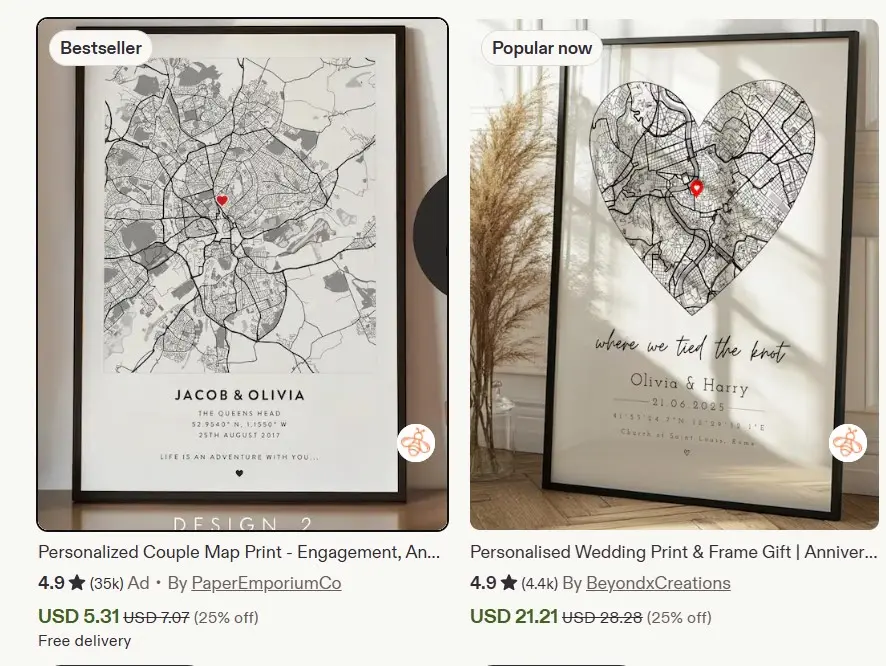
Internal marketing refers to the efforts you make within the platform where your e-book is hosted. This includes massive marketplaces like Amazon Kindle Direct Publishing (KDP), Etsy, Creative Fabrica, and Gumroad.
These platforms have built-in audiences, but those audiences are accessed strictly through search. Therefore, internal marketing is essentially Search Engine Optimization (SEO) for digital products.
When a potential reader types a specific query or keyword into the Amazon search bar, you want your e-book to be the first thing they see. To achieve this, you must obsessively optimize every piece of metadata the platform allows.
How to Create and Sell Profitable Ebooks : The Ultimate AI-Powered Guide
Key Elements of Internal E-Book SEO:
- The Title & Subtitle: This is the most heavily weighted ranking factor. Your primary keyword must be naturally integrated. Instead of “My Book on Productivity,” use “The Productivity Blueprint: 10 Habits to Master Your Time.”
- The Description: Think of this as a sales letter, not a summary. It must be formatted with HTML (if the platform allows), use bullet points for readability, and weave in secondary keywords (LSI keywords) that relate to your main topic.
- Categories & Tags: Be incredibly specific. Don’t just choose “Self-Help.” Choose “Self-Help > Time Management > Productivity.”
- The Elegant Book Cover: While algorithms can’t “see” your cover, humans can. A professional, genre-appropriate cover drastically increases your Click-Through Rate (CTR). If your cover looks amateurish, your high search ranking won’t matter—no one will click.
- Social Proof (Reviews): Algorithms favor books with higher conversion rates and positive reviews. Implement strategies to get early reviews to trigger the algorithmic boost.
Internal marketing is your foundation. It ensures that when the intentional searcher comes looking for a solution, you are there to provide it. But what about the millions of people who don’t even know they have a problem you can solve? That requires Engine 2.
Engine 2: External Marketing (Driving Outbound Traffic)
External marketing is the art of pulling people from outside your selling platform (like Instagram, TikTok, Pinterest, or YouTube) and funneling them directly to your e-book’s landing page.
This is where the true magic of modern marketing happens. Instead of waiting for people to search for you, you interrupt their scrolling pattern, capture their attention, and direct them to your store.
Historically, this required expensive ad campaigns or a massive, years-in-the-making social media following. Today, it requires something much more accessible: Curiosity-driven visual storytelling.
The “Hidden Curious Method”: Turning Chapters into Traffic
The most effective way to promote your e-book externally is not to say, “Buy my new e-book.” Nobody wants to be sold to on social media. Instead, you must use the Hidden Curious Method.
This method relies on a psychological principle called the Curiosity Gap—the space between what a person knows and what they want to know. Your goal is to crack open that gap using snippets of your own e-book, driving the viewer mad with the desire to know the rest of the story or the full strategy.
Here is how it works conceptually: You extract the most valuable, mind-bending, or controversial “bytes” from your e-book chapters and present them in a narrative format. You give them the what and the why, but you withhold the how. The how is locked inside your e-book, accessible only via the link in your bio or the first comment.
Why Carousel Posts and Story Slides are the Ultimate Format
Which format is best for delivering this curious content? Text posts are ignored. Long videos are skipped. The absolute gold standard for e-book promotion right now is the Visual Carousel Post (on Instagram, LinkedIn, or Facebook) and Story Slides (on TikTok, Instagram, or YouTube Shorts).
Carousels are uniquely powerful because they force user interaction. Every time a user swipes to the next slide, the social media algorithm registers a high-engagement event. The algorithm thinks, “This content is amazing, people are spending a long time looking at it,” and it pushes your post to more people.
Furthermore, a well-designed carousel allows you to tell a step-by-step story. It hooks the user on slide one, builds tension on slides two through six, and delivers a massive Call to Action (CTA) on the final slide.
Step-by-Step: Building a High-Converting E-Book Carousel
To execute the Hidden Curious Method manually, you would traditionally need a graphic design degree and hours of free time. But let’s break down the anatomy of a perfect e-book promotional carousel so you understand the mechanics:
Step 1: The Hook (Slide 1) This must stop the scroll immediately. Use a bold statement, a counter-intuitive fact, or a direct challenge to the reader. Example: “Stop saving money. Here is why your savings account is actually making you poorer.”
Step 2: The Agitation (Slides 2-3) Expand on the hook. Poke at the reader’s pain points. Validate their frustrations. Show them that you understand exactly what they are going through.
Step 3: The Secret ‘Bytes’ (Slides 4-6) This is where you pull directly from your e-book. Give them tangible, actionable advice, but leave out the crucial final step. Give them 80% of the puzzle.
Step 4: The Payoff & CTA (Final Slide) This is the most important slide. You must explicitly tell them where to get the remaining 20%. It must be direct and visually distinct. Example: “Want the exact 30-day blueprint to fix your finances? Grab the full e-book with 50+ actionable templates. Link in bio.”
While this strategy is incredibly effective, doing it manually for every chapter of your e-book is exhausting. This is where technology steps in to level the playing field.
Leveraging AI to Automate Visual Storytelling
Imagine if you could take a single paragraph from Chapter 4 of your e-book, click a button, and have an entire, perfectly formatted, highly engaging 7-slide carousel generated for you in seconds—complete with copy, hashtags, and a branded CTA.
This is no longer science fiction. It is the reality of modern digital product marketing, and it is the secret weapon separating six-figure e-book sellers from those struggling to make their first sale.
The “AsktoStory” Revolution
At the forefront of this revolution is a methodology (and corresponding tool) known as Ask to Story. The philosophy behind Ask to Story is brilliant in its simplicity: Your e-book was written to solve a specific problem or frustration. Therefore, the marketing for that e-book should directly answer the questions your target audience is asking, converting those answers into beautiful visual stories.
Here is how leveraging an AI carousel generator transforms your workflow:
1. Content Extraction: Instead of starting from a blank canvas, you start with your existing asset. You copy a powerful section from your e-book—perhaps an introduction to a chapter, a bullet-point list of tips, or a case study. You paste this “topic” into the AI tool.
2. Platform-Specific Customization: Not all social media is created equal. An Instagram carousel requires different sizing and tone than a LinkedIn post or a TikTok text-to-video slide. Advanced tools allow you to select your target platform (Instagram, TikTok, LinkedIn) so the output is perfectly optimized for that specific feed.
3. The Branded Call to Action (The Money Slide): The genius of using a dedicated marketing tool is the ability to hard-code your Call to Action. You don’t just ask the AI to make a slide; you instruct it: “If you like these points, you will find more than 50 amazing strategies in our e-book. Find the link in the bio.” The AI places this perfectly on the final slide, ensuring every single piece of content you post has a direct monetization pathway.
4. Multi-Language Dominance: If your e-book is in English, you are limiting yourself to a fraction of the global market. Tools like Ask to Story support multiple languages—Arabic, Spanish, Portuguese, French, Italian, and more. You can take one English paragraph from your book and instantly generate a Spanish Instagram carousel, tapping into entirely new, less saturated markets.
5. Brand Consistency: Amateur marketers use random fonts and colors. Professionals build brands. With the right tool, you can upload your custom fonts, insert your logo or profile picture, and ensure that every single slide you post reinforces your business’s visual identity.
By automating the design and copywriting process, you remove the friction that causes most creators to quit. You are no longer “making social media posts”; you are simply “repurposing your e-book content.” It shifts the psychology from exhausting to effortless.
Integrating the A-Z E-Book Ecosystem
To truly understand the power of this modern approach, we must look at the entire lifecycle of a digital product. Selling e-books is not a single event; it is an ecosystem.
If you want to succeed—even if you have zero prior experience or technical skills—you need an end-to-end system. This is the philosophy behind comprehensive digital product suites like the Incomesify Package.
Let’s look at how a unified ecosystem works:
Phase 1: Crafting the Asset (Ask to Book)
You cannot market a low-quality product. The first step is creating an e-book that is not just a boring wall of text, but a “beautiful, valuable product.”
Modern creators use tools like Ask to Book to structure their knowledge. Instead of staring at a blank Word document, you input your topic, and the AI helps you generate a professional structure: introductions, copyright notices, author bios, and logically flowing chapters.
But it goes further. To justify a premium price point, your e-book must be packed with actionable tools. The best e-books include integrated checklists, worksheets, and action plans. When your e-book feels like a comprehensive toolkit rather than a simple PDF, refunds drop, reviews skyrocket, and word-of-mouth marketing kicks in.
Phase 2: Promoting the Asset (Ask to Story)
Once the masterpiece is created, you immediately transition to Phase 2. You take the chapters you just generated and run them through the Ask to Story engine. Within minutes, you have a folder filled with 10, 20, or 30 high-quality carousel posts ready to be scheduled across your social media channels.
Phase 3: Selling the Asset
With traffic flowing from your social media carousels to your link-in-bio, your optimized platform store (from Engine 1: Internal Marketing) takes over. The elegant cover catches their eye, the SEO-optimized description convinces them, and the sale is made.
When you have a suite of tools that guides you from A to Z—crafting, promoting, and selling—you eliminate the “overwhelm” that kills 90% of digital product businesses. You don’t have to piece together five different expensive software subscriptions. You use a unified package designed specifically for the digital creator economy.
Platform-Specific Strategies for Carousel Dominance
Knowing how to make a carousel is one thing; knowing where to post it is another. Let’s break down the strategy for the top four platforms where the Hidden Curious Method thrives.
1. Instagram: The Carousel King
Instagram is the birthplace of the modern educational carousel. The algorithm currently heavily favors carousel posts over static images or Reels for “saveable” content.
- Strategy: Focus on highly aesthetic, minimal text-per-slide designs. Use your brand colors. End every caption with a clear directive to “Save this post for later” (which boosts algorithmic reach) and “Link in bio to read more.”
- Best for: Personal development, business strategies, aesthetic hobbies, health & wellness.
2. LinkedIn: The B2B Goldmine
LinkedIn carousels (PDF uploads) are vastly underutilized, making them a massive opportunity for B2B e-books (leadership, marketing, SaaS, finance).
- Strategy: LinkedIn audiences tolerate more text. You can create highly detailed, data-driven slides. The tone should be professional and thought-provoking.
- Best for: Career advice, corporate strategies, high-ticket B2B lead generation e-books.
3. Pinterest: The Evergreen Traffic Trap
Pinterest is not social media; it is a visual search engine. Unlike an Instagram post that dies in 48 hours, a Pinterest carousel can drive traffic to your e-book for years.
- Strategy: Your first slide must be heavily optimized for Pinterest SEO. Use bold, clear text stating exactly what the e-book solves (e.g., “10 Mistakes First-Time Dog Owners Make”).
- Best for: Recipes, DIY, crafting, wedding planning, home decor, and niche hobbies.
4. TikTok & YouTube Shorts: The Video Adaptation
While native carousels don’t exist here in the same way, you can use the same AI-generated slides to create “Text-on-Screen” videos.
- Strategy: Take your 7-slide carousel, put it in a video editor, add an automated voiceover (or a trending background audio track), and set each slide to display for 3 seconds. It’s a rapid-fire value dump that performs incredibly well.
- Best for: Gen Z demographics, entertainment-education hybrid content, trend-jacking.
Conclusion: Your Future in Digital Product Sales
Selling digital products and e-books remains one of the most lucrative, scalable business models on the internet. The margins are near 100%, there is no inventory to ship, and you can work from anywhere in the world.
Yet, the graveyard of failed e-books is vast, filled with creators who gave up at the marketing phase. They thought creating the product was the hard part.
Now you know the truth. The hard part is seamlessly bridging the gap between your amazing content and the target audience desperately searching for it. You must master Internal SEO to capture the intentional searchers, and you must leverage External Marketing—specifically the Hidden Curious Method—to capture the passive scrollers.
You no longer have an excuse to let your e-book gather digital dust. By extracting the hidden gems from your chapters and transforming them into visually stunning, story-driven carousels, you can build an automated traffic machine.
And with the advent of AI ecosystems like Incomesify—which allow you to craft your book with Ask to Book and instantly promote it with Ask to Story—the barrier to entry has been completely obliterated. You do not need a massive following. You do not need a degree in graphic design. You just need a willingness to put your knowledge out into the world and let the systems do the heavy lifting.
Stop waiting for the “perfect time” to start marketing. The perfect time is the moment you finish your first chapter. Extract the value, spark the curiosity, and start building the digital empire you deserve.
Frequently Asked Questions (FAQ) About E-Book Marketing
What is the fastest way to promote a new e-book with no audience? The fastest way is to leverage the “Hidden Curious Method” via platform algorithms (like Instagram Reels/Carousels or Pinterest). You do not need followers; you need high-engagement content that the algorithm pushes to other people’s feeds. Carousels that solve a specific problem quickly generate organic reach regardless of your follower count.
How important is the e-book cover for digital marketing? In external marketing, the cover is less important than the carousel slide design. However, in internal marketing (Amazon KDP, Etsy), your cover is your primary conversion tool. If your cover looks unprofessional, potential buyers will assume the content inside is also low quality, destroying your conversion rate and causing algorithms to stop promoting you.
Can I really turn my e-book chapters into social media posts? Absolutely. In fact, it is the most efficient content repurposing strategy available. Your e-book is a concentrated hub of knowledge. By breaking it down into smaller “bytes” or micro-lessons, you can generate hundreds of social media posts from a single 50-page e-book.
Do I need paid ads to sell my digital product? No. Paid ads are an accelerator, not a prerequisite. Many successful digital creators use a 100% organic strategy relying on SEO (Internal Marketing) and social media carousels (External Marketing). You should only consider paid ads once your organic funnels are proven to convert.
How do AI tools like “Ask to Story” actually help with SEO? While AI carousel generators primarily help with external social media marketing, they indirectly boost your SEO. High-quality carousels drive targeted traffic to your e-book landing page. When search engines (like Google) see a sudden influx of relevant, engaged traffic hitting your page, it boosts your page’s domain authority and organic search ranking over time. Furthermore, some tools generate SEO-optimized captions and hashtags that help your social profiles rank in Google search results.